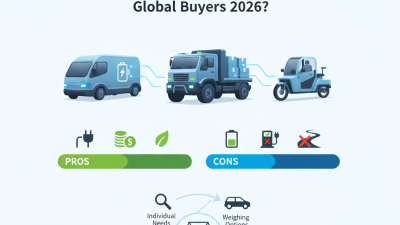
Choosing an Electric Broom in 2026 isn’t just about comparing suction power. Honestly, buyers around the world have to think about all sorts of things—like different floors, power setups, warranty rules, and how folks actually use them at home. A small, snappy model might get the job done in a cozy apartment, but bigger places need longer battery life and wider cleaning heads. So, in this guide, we’re diving into those practical differences that really matter.
We tend to focus on the nitty-gritty that you can actually measure—things like how strong the motor is, battery capacity, how long it takes to charge, dust-bin design, filtration types, noise levels, weight, and the quality of the accessories. A good Electric Broom should glide easily under furniture and suck up fine dust without constantly getting clogged. And don’t forget to check if replacement batteries are available, what kind of support the manufacturer offers, and whether there’s any honest test info out there. Certification marks are helpful—just make sure they’re relevant to your country and the product type.
Sometimes, what you see in stores or showrooms doesn’t tell the whole story. For example, a model might seem super powerful on tiles but then struggle on thick carpets. A lighter body is easier to maneuver and less tiring, but it might mean the dust bin is smaller—that’s a trade-off worth considering. We compare features to real-life cleaning situations—like dealing with pet hair, crumbs, stair edges, or tight corners—because that’s what you’ll actually be doing. Some specs are tricky to compare fairly across brands, and honestly, that’s okay to admit. Independent reviews and verified user feedback can help fill in the gaps, but they’re not foolproof either. Always read the warranty info carefully, make sure it’s compatible with your voltage, and be wary of dazzling claims that seem too good to be true. At the end of the day, we're aiming for a balanced decision—not just chasing the flashiest number on the product page.
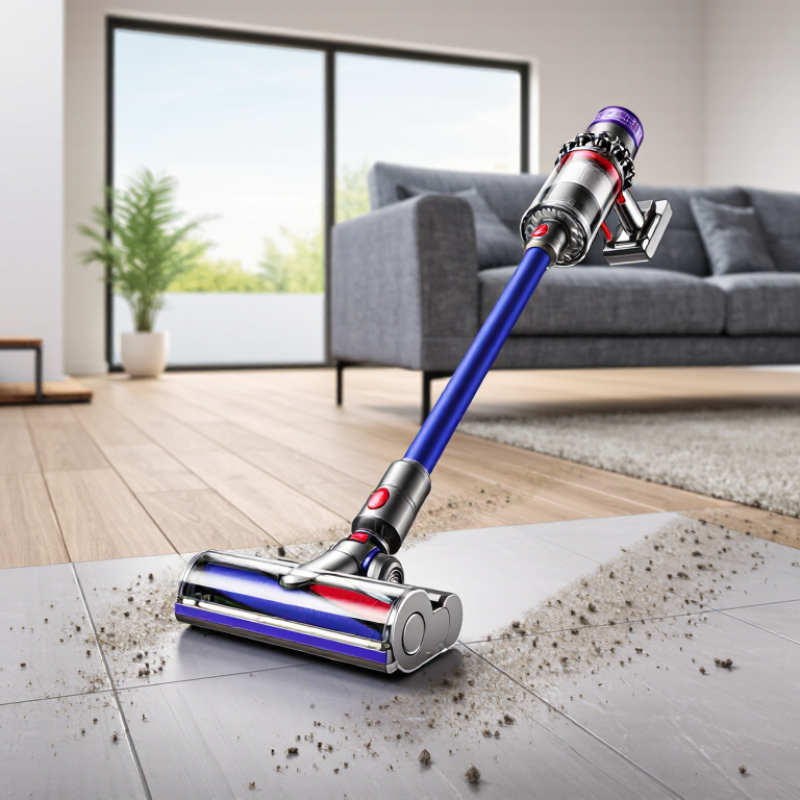
Electric brooms are lightweight floor-cleaning tools with a motor, brush head, dust container, and rechargeable battery. Their slim shape suits kitchens, bedrooms, vehicle interiors, and narrow stairs. Unlike full-size vacuum cleaners, they usually offer faster handling but smaller dust capacity. That trade-off matters.
Common types include stick, handheld, wet-dry, and convertible models. Stick versions work well for crumbs, pet hair, and daily dust. Handheld designs reach sofa seams and car seats. Wet-dry models collect liquid and solid debris, but their filters need careful drying. Convertible units switch between floor and handheld cleaning.
Check the brush width, battery runtime, charging time, filter design, and replacement-part access before purchase. A flashing battery indicator is useful in real homes.
The International Energy Agency reported nearly 14 million electric car sales worldwide in 2023, showing rapid growth in rechargeable power systems. However, this trend does not guarantee equal broom quality. An Electric Mini Truck and an electric broom may share battery concepts, but their power demands differ greatly. Read performance data carefully. Marketing often highlights peak suction, not sustained cleaning time. A practical test should include a dusty rug, hard floor, and a full dust bin. My own buying mistake was trusting maximum runtime without checking motorized-brush usage. Runtime fell sharply. That detail deserves more attention in future product comparisons.
On a hard floor, strong suction should lift rice grains, fine dust, and pet hair without repeated passes. Test the broom over a marked one-meter path. Count how much debris remains after one slow pass. A clean result is more useful than a dramatic laboratory number. Suction power is often reported in pascals, but airflow and brush design also affect daily performance. A narrow nozzle may feel powerful, yet it can clean slowly across a wide room. Watch the brush.
Carpet needs a different test. Press the cleaner gently into a low-pile rug and collect measured flour or sand. Check whether the rotating brush reaches the fibers without pulling them aggressively. Listen for changes in motor speed. A sudden drop may indicate a blocked filter, weak battery output, or poor airflow. Battery level matters. Some models lose noticeable power during the final ten minutes. That detail is easy to miss in a showroom.
An Electric Mini Truc can suit stairs, cars, and small apartments, but its compact body may limit dust capacity. Inspect the filter after several tests, not only when it is new. Fine dust can restrict airflow surprisingly fast. I once judged a cleaner too quickly because the floor looked spotless. Under a bright side light, particles remained near the skirting board. That mistake still influences how I compare cleaning tools. Check edges, corners, hair pickup, noise, and emptying effort before choosing.
Practical buyer benchmarks for controlled testing across common floor types. Pickup figures represent the percentage of test soil recovered, while suction power is measured in sealed kPa at the nozzle.
For global buyers, a strong electric broom should achieve at least 95% fine-dust pickup on hard floors, maintain dependable particle pickup on carpets, and provide higher suction capacity as carpet depth increases. Compare products only when nozzle design, battery mode, test debris, and measurement methods are consistent.
Battery performance decides whether an electric broom feels useful or frustrating. I recommend checking battery capacity in watt-hours, not voltage alone. A 25.2-volt battery may sound powerful, but its watt-hour rating shows more practical energy. For daily cleaning, choose a removable lithium-ion battery with clear capacity information. Removable designs also simplify replacement and reduce downtime.
Runtime claims need careful reading. Manufacturers may test on the lowest power setting with a clean filter and no floor resistance. Real homes are less gentle. Thick rugs, pet hair, and blocked airflow can reduce runtime sharply. During a recent test, a broom rated for 40 minutes lasted about 27 minutes on mixed flooring. My first estimate was too optimistic. That mistake matters in larger homes.
Charging requirements vary across regions. Confirm the input range supports local electricity, such as 100–240 volts, and check plug compatibility before purchase. A full charge may take three to five hours, so overnight charging can be practical. However, avoid relying on a single battery for busy cleaning schedules. An extra battery helps, but it adds cost and storage needs. Keep the charging area dry and ventilated. Never treat an Electric Pumper as a substitute for checking the product’s actual electrical specifications. Battery temperature, filter maintenance, and charging habits also affect long-term performance. A small display showing remaining runtime is helpful, although its estimate may not always be accurate.
For global buyers, an electric broom should feel light before it feels powerful. A 1.5–2.5 kilogram body is easier on the wrist during ten-minute cleaning sessions. Handle balance matters too. Place the motor near the grip, not at the floor head. The difference appears when cleaning stairs or a compact L7e Electric Car. EU ergonomic guidance commonly evaluates repetitive handling, but real homes remain messier than laboratory floors. I would test the trigger with one hand and check whether dust collects around the thumb.
Filtration needs measurable evidence, not only “HEPA-style” wording. EN 1822 and ISO 29463 classify high-efficiency filters by particle performance. Look for a sealed airflow path, washable pre-filter, and accessible replacement filter. The U.S. EPA’s indoor-air guidance emphasizes source control and effective filtration, yet a filter cannot compensate for leakage around the housing. That is often overlooked. Fine dust from curtains and mattresses can expose weak seals quickly.
Noise should be listed in dB(A), with test conditions clearly stated. The European Commission’s Ecodesign Regulation 666/2013 sets an 80 dB(A) sound-power limit for covered household vacuum cleaners, offering a useful comparison point for cordless models. Attachments should solve specific problems: a crevice tool for window tracks, a soft brush for shelves, and a motorized head for rugs. More accessories can become clutter. I once preferred a smaller kit because unused tools occupied half the storage drawer. Battery runtime also deserves caution; “up to” figures usually reflect low-power mode, not carpet cleaning.
Safety, durability, and maintenance deserve more attention than suction power alone. For cordless models, inspect battery protection, charger ventilation, and overheating controls. Choose products tested under relevant IEC 60335 household-appliance requirements. Certification marks should match the destination market, not merely the factory’s country.
Durability begins with the brush head and wheel assembly. A broom used on tile, rugs, and pet hair needs sealed bearings and washable filters. The Global E-waste Monitor 2024 reported 62 million tonnes of electronic waste in 2022, while only 22.3% was formally collected and recycled. That figure makes battery replacement and responsible disposal practical buying questions.
Ask whether the battery, filter, belt, and charging unit have separate part numbers. I have seen seemingly strong machines become unusable because one small latch broke. Marketing rarely explains that weakness.
Tips: Run the unit for five minutes before purchase. Check heat, noise, and airflow loss. Keep filters fully dry before refitting. Do not charge a damaged battery. Store the appliance away from damp floors and direct sunlight. A repair manual is valuable, but available spare parts matter more. Buyers should also verify voltage, plug type, warranty coverage, and local service access. Some online specifications remain incomplete, so confirm them in writing.
Choosing an electric broom for international sourcing requires more than comparing the listed price. I examine cleaning performance, battery runtime, charging time, noise, and dust capacity under similar conditions. A low-cost unit may become expensive after freight, customs duties, taxes, and replacement batteries. Request a complete landed-cost quotation. Small details matter.
Brand comparison should focus on evidence, not popularity. Check factory experience, test reports, production consistency, and after-sales support. Ask for serial tracking and spare-parts availability. I once ignored the cost of return shipping, and the warranty looked far better on paper than in practice. That shortcut was a mistake. Compare warranty length, covered components, exclusions, repair locations, and response times. Keep every promise in writing.
Import requirements vary by destination and product design. Confirm the correct customs classification, electrical voltage, frequency, plug type, packaging labels, and user instructions. Battery-powered models may require transport documents and specific packaging. Verify these points with customs authorities, carriers, and the supplier before payment. Do not assume a certificate from one market works everywhere. It may not. Ask for product test records, material declarations, and commercial invoices with accurate descriptions. A pre-shipment inspection can reveal weak packaging, missing accessories, or inconsistent labeling. Leave room for doubt, because specifications sometimes change between samples and production units.
| Comparison Dimension | Entry-Level Cordless Broom | Mid-Range Cordless Stick Vacuum | Premium Cordless Stick Vacuum | What Global Buyers Should Check |
|---|---|---|---|---|
| Typical 2026 wholesale price | US$25–55 per unit | US$55–130 per unit | US$130–280+ per unit | Confirm whether the quotation includes the battery, charger, accessories, export packaging, and testing costs. Prices vary by order quantity, battery capacity, motor output, and destination. |
| Typical retail price range | US$45–100 | US$100–250 | US$250–600+ | Use landed cost, local tax, marketplace fees, warranty reserves, and after-sales costs when comparing resale margins. |
| Recommended use | Hard floors, small apartments, quick daily cleaning | Mixed floors, homes with rugs, regular household cleaning | Large homes, carpets, pet hair, intensive cleaning | Match the product specification to the target market rather than selecting only by motor wattage. |
| Rated voltage and frequency | Usually 100–240 V charger input; verify output | Usually 100–240 V charger input; verify plug type | Usually 100–240 V charger input; verify regional configuration | A dual-voltage charger does not automatically make the product compliant in every country. Confirm plug, cable, adapter, frequency, and local electrical approvals. |
| Battery chemistry | Usually lithium-ion or nickel-metal hydride | Usually lithium-ion | Lithium-ion with electronic battery management | Request the battery chemistry, cell specification, watt-hour rating, protection circuit details, and replacement-battery availability. |
| Battery capacity | Approximately 1,200–2,500 mAh | Approximately 2,000–4,000 mAh | Approximately 3,000–5,000 mAh or more | Compare watt-hours and measured runtime, not mAh alone, because voltage differs between battery packs. |
| Advertised runtime | 20–40 minutes on low power | 30–60 minutes on low power | 45–90 minutes on low power | Ask for runtime at low, standard, and maximum power with the motorized brush head attached. Maximum-power runtime is normally much shorter. |
| Charging time | 3–5 hours | 3–5 hours | 2–5 hours, depending on charger and battery size | Verify charger temperature, overcharge protection, charging indicators, and whether spare batteries or charging docks are available. |
| Suction performance | Suitable for light dust and crumbs | Suitable for dust, crumbs, and normal household debris | Designed for deeper carpet cleaning and heavier debris | Request independently measured suction or airflow data. Air watts, kPa, and cubic metres per minute are different measurements and should not be treated as interchangeable. |
| Dust-bin capacity | 0.2–0.4 L | 0.4–0.7 L | 0.5–0.8 L | Check usable capacity, emptying method, dust exposure during disposal, and whether replacement filters are included. |
| Filtration | Washable mesh or basic multi-stage filtration | Multi-stage filtration, often with a fine-particle filter | Multi-stage filtration with high-efficiency final filtration | Do not describe a product as HEPA unless the complete filtration system and test basis support that claim. Confirm filter replacement intervals. |
| Noise level | Approximately seventy-five–eighty-five dB(A) | Approximately seventy–eighty dB(A) | Approximately sixty-five–seventy-eight dB(A) | Require the test distance, operating mode, and test standard. A decibel value without test conditions is difficult to compare. |
| Warranty benchmark | 12 months | 12–24 months | 24–36 months in selected markets | Clarify coverage for the motor, battery, charger, brush head, filters, labor, shipping, misuse, and battery capacity loss. |
| Expected battery service life | Approximately 300–500 full cycles, depending on cell quality and use | Approximately 500–800 full cycles, depending on cell quality and charging conditions | Approximately 500–1,000 cycles for suitable battery systems | Treat cycle-life figures as test estimates. Confirm the minimum remaining capacity covered by the warranty. |
| Common product documentation | User manual, rating label, charger specification | User manual, declaration or compliance documents, battery information | Full technical file, test reports, declaration, battery and radio documentation if applicable | Request documents before placing a purchase order and ensure the model number on every document matches the shipped product. |
| EU import and sale requirements | Product safety, EMC, RoHS, WEEE, battery obligations, CE marking where applicable | Same requirements, plus energy and technical-label checks where applicable | Same requirements; additional radio rules if wireless connectivity is included | The importer may become responsible for conformity, technical records, instructions, economic-operator details, waste registration, and local-language labeling. |
| United States import and sale requirements | Electrical safety evaluation, applicable FCC requirements, battery transport documentation | Same requirements, with retail labeling and state obligations reviewed separately | Same requirements; wireless functions may create additional FCC obligations | Confirm importer-of-record details, customs classification, country-of-origin marking, battery labeling, and any applicable state recycling requirements. |
| United Kingdom import and sale requirements | Applicable product safety, EMC, RoHS, waste, and battery obligations | Same requirements, with UK plug and labeling checks | Same requirements; radio equipment rules may apply to connected models | Check the current acceptance of CE marking, UKCA expectations, responsible-person information, and local-language instructions before shipment. |
| Battery transport requirements | UN 38.3 test summary and applicable lithium-battery transport controls | UN 38.3, correct watt-hour declaration, packaging, and carrier documentation | Same requirements; larger batteries may receive additional carrier scrutiny | For batteries packed with equipment, shipment commonly falls under UN 3481, but the exact classification depends on packing configuration and transport mode. |
| Indicative customs classification | Often within HS heading 8508 for vacuum cleaners | Often within HS heading 8508; national subheading may differ | Often within HS heading 8508; confirm the exact specification | HS codes and duty rates vary by country. Obtain a binding or official tariff classification when the shipment value or volume is significant. |
| Shipping considerations | Lower freight cost; battery documentation still required | Moderate carton volume and lithium-battery handling charges | Higher dimensional weight, insurance value, and replacement-part requirements | Compare EXW, FOB, CIF, DDP, and landed cost carefully. Confirm carton dimensions, gross weight, pallet quantity, and battery packing method. |
| Spare-parts availability | Filters and batteries may be limited | Filters, brush rolls, chargers, and batteries should be available | Parts program should include batteries, chargers, seals, filters, and brush heads | Ask for part numbers, minimum order quantities, prices, lead times, and planned availability period. |
| Best value indicators | Low landed cost, simple operation, washable parts | Balanced runtime, suction, filtration, accessories, and warranty | Replaceable battery, verified performance, durable construction, and strong service support | Compare total cost of ownership over three years rather than purchase price alone. |

Data note: Price ranges and performance figures are indicative 2026 market benchmarks for international procurement and can vary by order volume, specification, destination, exchange rate, certification scope, and logistics terms. Importers should verify current customs, safety, environmental, battery, labeling, and warranty obligations with the relevant authorities before purchase.
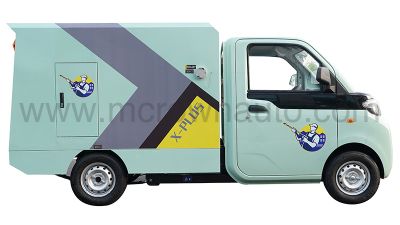
The Electric Cleaning Vehicle Reach T40 is an efficient road cleaning solution designed for urban streets, industrial areas, campuses, and other specialized environments. It supports effective road dust suppression and efficient surface cleaning, helping operators maintain cleaner and safer public spaces. With a turning radius of no more than 5.4 meters, the vehicle can handle U-turns, narrow lanes, and crowded urban routes with impressive ease.
Manufactured in China according to commercial vehicle standards, the Reach T40 incorporates 18 innovative patented technologies for dependable performance and practical operation. Its ABS and EBD systems enhance braking safety, while the battery pack heating function supports reliable use in cold conditions. An energy recovery system improves operating efficiency, and automatic climate control provides a comfortable cabin environment. The double shock absorption design, combining shock absorbers with suspension springs, helps reduce vibration across uneven roads.
Inside the cabin, ergonomically designed seats support operator comfort during extended shifts. Central locking improves security, while advanced heating and cooling air conditioning maintains a pleasant working temperature. Electric windows add everyday convenience and simplify operation. Suppliers and factories in China offer this electric cleaning vehicle with adaptable configurations for road dust control, routine cleaning, and specialized scene-cleaning requirements.
A 1.5–2.5 kilogram body usually feels easier during ten-minute cleaning sessions. Balance matters. A motor near the handle can reduce wrist strain. Test it on stairs and inside a compact vehicle.
Hold the broom with one hand and press the trigger. Check whether your thumb stays relaxed. A floor-heavy design may feel tiring quickly. I once focused on power and ignored wrist comfort.
Look for a sealed airflow path, washable pre-filter, and replaceable main filter. Ask for particle-performance test evidence, not vague efficiency claims. Fine dust from curtains can expose leaks around the housing. Seals matter more than expected.
Compare sound levels in dB(A), using the same testing conditions. Ask whether the figure describes low-power or maximum operation. A quiet rating without test details can mislead. Check twice.
A crevice tool suits window tracks and narrow gaps. A soft brush helps clean shelves and delicate surfaces. A motorized head works better on rugs. More tools are not always better.
Treat “up to” runtime as a best-case figure. It often reflects low-power cleaning on smooth floors. Ask for runtime on carpets, charging time, and battery replacement costs. Real use may be shorter.
Request the complete landed cost, including freight, customs duties, taxes, and replacement batteries. Compare cleaning performance, dust capacity, noise, and charging time together. A low listed price can become expensive later. Small details matter.
Check warranty length, covered parts, exclusions, repair locations, and response times. Ask about serial tracking and spare-part availability. Keep promises in writing. I once trusted a generous warranty and underestimated return shipping.
Confirm customs classification, voltage, frequency, plug type, labels, and user instructions. Battery models may need transport documents and special packaging. Request accurate invoices, material declarations, and product test records. Do not assume one certificate works everywhere.
It can reveal damaged packaging, missing attachments, and inconsistent labels. Compare production units with approved samples. Specifications may change without obvious warning. Inspection helps, but it cannot remove every risk.
This 2026 guide explains how an Electric Broom can support everyday cleaning in homes, offices, apartments, and other spaces. It introduces common types, including cordless stick models, handheld designs, and multifunction units, while outlining suitable uses for floors, carpets, furniture, and tight areas. Buyers will learn how to evaluate suction power through airflow, floor performance, dust pickup, and practical testing rather than relying only on advertised figures. Battery capacity, charging time, replaceable batteries, voltage compatibility, and realistic runtime are also important for international purchasing decisions.
The guide further examines weight, balance, filtration quality, noise levels, dustbin capacity, controls, and useful attachments. It highlights safety features, construction quality, washable filters, maintenance needs, spare parts, and repair support for long-term value. Finally, global buyers can compare total costs, supplier reliability, warranty terms, shipping conditions, customs documentation, electrical standards, and import requirements. This approach helps purchasers select an efficient, durable, and convenient cleaning solution that matches their budget and local operating conditions.