Lately, the demand for Small Electric Vans has really picked up, thanks to the whole shift worldwide towards more sustainable transportation options. According to a report from Market Research Future, the market for these vans is expected to grow at a pretty impressive rate—over 30% annually up until 2025. That’s pretty huge, and it’s opening up some cool opportunities for businesses looking to go green with their logistics. Industry pro John Smith even points out, "Switching to small electric vans isn’t just a nice-to-have anymore; it’s become a must for modern fleets."
Now, as companies start hunting for reliable OEM suppliers, one of the biggest hurdles is actually finding quality manufacturers. Even though the benefits are clear, lots of businesses struggle to find the right partner. The tricky part is assessing who’s reliable, innovative, and also offering competitive pricing. It’s not exactly an easy process, and, honestly, many end up pretty disappointed because they rush or overlook some of these details.
Getting it right with your Small Electric Van supplier can really pay off in the long run. But don’t just pick anyone; you’ve got to pay close attention to the details. It’s super important to evaluate suppliers based on their technical know-how and customer support—those things matter a lot. There are plenty of players out there, but not all can meet the high standards we’re after. So, yeah, choosing the right partner is definitely something to take your time with.

The Importance of Choosing the Right OEM Small Electric Van Supplier
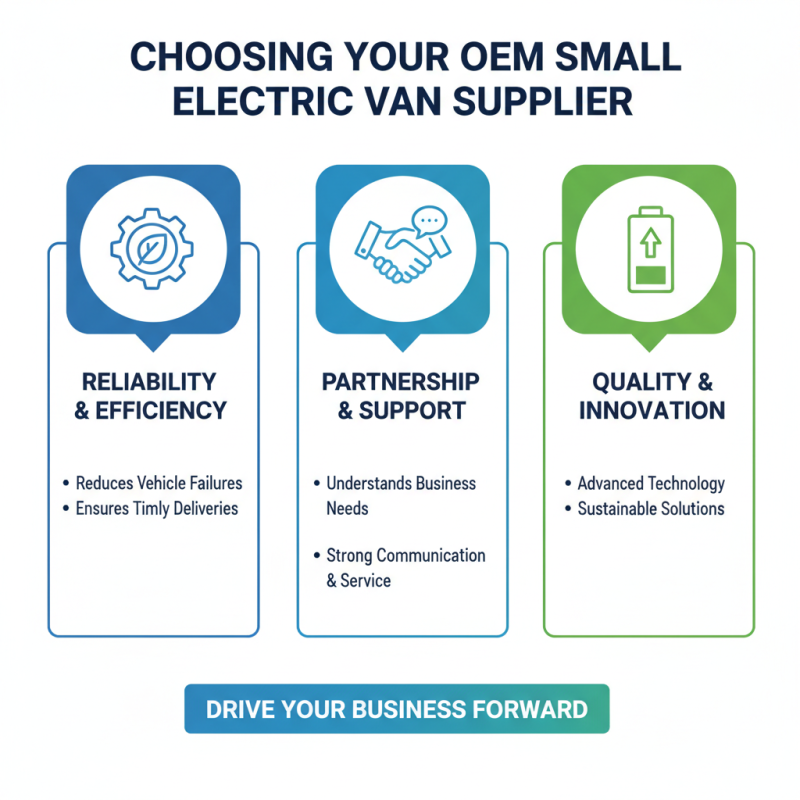
Choosing the right OEM small electric van supplier is crucial for many businesses today. A quality supplier ensures reliability and efficiency in deliveries. It reduces the risk of vehicle failures. You want a partner who understands your needs. They should offer good support and communication.
Many suppliers promise high quality, but not all deliver. It’s essential to check their reputation. Look for reviews from other customers. Some companies may have inconsistent quality. This could lead to unexpected costs and delays. Assess their production capabilities as well. Are they able to scale up if your demand increases?
Don’t overlook the importance of warranties and after-sales service. A great supplier offers solid warranties. It shows confidence in their products. It’s also vital to have clear channels for support. These elements can save your business headaches. Take the time to research before making a decision. A well-informed choice can lead to better outcomes for your operations.
Key Factors to Consider When Selecting an OEM Supplier
When selecting an OEM supplier for a Small Electric Cargo Van, several key factors stand out. First, evaluate the supplier's experience in the electric vehicle market. Look for a company that understands the unique requirements of small electric vans. Their knowledge can influence the quality of the product.
Tip: Research the supplier's history. Check their previous projects and client feedback.
Another important factor is the customization options available. A reliable supplier should allow for modifications in design and functionality to suit specific business needs. Consider how flexible they are in terms of production capabilities.
Tip: Seek out suppliers that encourage dialogue. Good communication can reveal their willingness to adapt.
Lastly, think about after-sales support. The supplier's ability to provide parts and service post-purchase is crucial. Poor support can lead to operational issues down the line.
Tip: Ask about warranty policies. A solid warranty reflects the supplier's confidence in their products.
Top High-Quality OEM Small Electric Van Manufacturers in the Market
The demand for high-quality OEM small electric vans continues to grow. According to a recent industry report,
Electric Small Cargo Vans are expected to witness a compound annual growth rate of 20% over the next five years. This surge in demand highlights the need for reliable suppliers who can meet evolving market needs.
When evaluating top manufacturers, look for companies that invest in advanced technology. Many suppliers are focusing on battery efficiency and vehicle range. The latest models offer ranges of up to 200 miles on a single charge, which can significantly impact urban logistics. Another consideration is the production capacity. A manufacturer that can scale quickly may better accommodate fluctuating demand.
Tips: Always ask about warranty and after-sales support. These factors can influence long-term satisfaction. It’s essential to compare different suppliers carefully. Not all manufacturers provide the same level of service and reliability. Keep in mind that some providers may have limitations in their designs, which could affect performance. Exploring a variety of options helps make a more informed decision.
Comparative Analysis of OEM Small Electric Van Features and Benefits
The small electric van market is evolving rapidly. These vehicles offer various features that cater to different needs. Understanding these
benefits can help you choose the best OEM supplier. For example, battery life varies significantly among models. Some vans provide short ranges but are more affordable. Others may cost more but offer longer distances.
Cargo space is another critical factor. It’s vital to assess how much you need for your operations. Some vans have a
modular design, allowing for flexibility. On the other hand, others might not meet space requirements.
Efficiency in energy usage is also essential. Many manufacturers have different approaches to this. Performance and comfort should not be overlooked either. Driving experience varies widely across various models. Some provide a
smoother ride, while others might feel less stable. Look for reviews that highlight these aspects. It's important to weigh these pros and cons, even if your choice isn’t
perfect.
Customer Reviews and Feedback on Leading OEM Suppliers
When searching for a high-quality OEM small electric van supplier, consumer feedback is invaluable. Many buyers appreciate suppliers that prioritize communication. Quick responses can ease the purchasing process. Customer reviews often highlight the reliability of their products. However, not all suppliers meet these standards. Some vans may lack essential features or quality.
Tips: Always look for reviews that discuss durability. Customers often mention how their vans perform over time. This information can be crucial for long-term investment decisions.
Additionally, consider the importance of service after the sale. Many suppliers falter here. Feedback reveals that some customers struggle with support. A good supplier should provide ongoing assistance. This can improve overall satisfaction and help resolve issues swiftly.
While many suppliers showcase excellent features, don’t overlook complaints. Some customers report delays in delivery or improper documentation. Such issues can lead to significant headaches. Collecting complete feedback will help make an informed choice.
Evaluating the Price vs. Quality Ratio of OEM Electric Vans
When evaluating the price versus quality ratio of OEM electric vans, several factors come into play. The first aspect is cost. Small Electric Delivery Vans often vary in price. Some suppliers offer budget options. These may lack advanced features. Others provide high-end models with enhanced technology. The right balance is crucial.
Quality should not be overlooked. A low price may come with sacrifices. Durability is one aspect. Cheaper vans might break down sooner. This leads to increased maintenance costs. A higher-quality small electric delivery van often means better materials and craftsmanship. The investment may save money in the long run.
Another factor is performance. Some vans excel in range and load capacity. Others may struggle under heavy use. Assessing the intended use is important. Will it be for local deliveries or longer routes? Understanding specific needs helps in making informed choices. Manufacturers may market their products, but reality often differs. Always seek reviews and comparisons. This can reveal hidden strengths and weaknesses.
Price vs. Quality Ratio of OEM Electric Vans
Future Trends in the OEM Small Electric Van Industry
The OEM small electric van industry is evolving rapidly. According to recent industry reports, global sales of electric vans are expected to grow by over 30% annually until 2030. This surge is driven by increasing urbanization and stricter emission regulations. Many companies are exploring electric solutions for last-mile delivery due to their low operating costs.
Production capabilities are a challenge. Not all manufacturers can meet the growing demand for high-quality Small Electric Trucks. Sourcing reliable components remains a significant hurdle. Data indicates that battery supply will be a critical factor in the upcoming years. Projections show that battery costs might drop below $100 per kWh by 2025, but inconsistencies in supply chains still raise concerns.
Consumer preferences are shifting. Fleet operators favor versatile, small electric vans that can navigate urban areas easily. However, range anxiety remains an issue. Many potential buyers worry about charging infrastructure. As the industry progresses, refining designs and addressing these fears will be crucial for suppliers aiming to lead in the small electric truck market. The challenges are real, yet the potential for innovation is immense.
Exploring Market Trends and Innovations in Electric Cleaning Vehicles: Insights from the Reach T40 and Industry Reports
The evolution of electric cleaning vehicles is gaining momentum as municipalities and businesses increasingly seek sustainable solutions for road maintenance and cleaning. Recent industry reports indicate that the market for electric commercial vehicles is expected to reach a valuation of over $100 billion by 2025, spurred by advancements in battery technology and growing environmental regulations. The Reach T40 exemplifies this trend by incorporating 18 patented technologies designed specifically for commercial applications. Its usage scenarios include road dust suppression, road cleaning, and specialized scene cleaning, catering to diverse municipal needs.
Incorporating smart features such as an energy recovery system and automatic climate control, electric cleaning vehicles like the T40 are positioned to enhance operational efficiency. The ABS+EBD systems provide superior braking control, ensuring safety and reliability in dynamic urban environments. Moreover, the vehicle's ergonomically engineered design boasts features like adjustable heating and cooling air conditioning, along with comfortable seating to accommodate long operational hours. This attention to detail aligns well with the industry's shift toward not just functionality but also user comfort.
Maneuverability is another crucial aspect, particularly in crowded urban areas. The T40's impressive turning radius of under 5.4 meters allows for seamless navigation in tight spaces, making it an ideal choice for city streets. Reports show that vehicles with enhanced maneuverability capacity contribute to reduced operational costs by minimizing the time and fuel expenditure required for cleaning tasks. All of these innovations underscore a significant shift in the market towards electric solutions that meet the increasing demand for environmentally friendly cleaning technologies.
FAQS
: Look for technology investment, battery efficiency, and vehicle range. Consider production capacity too.
Some models offer ranges up to 200 miles. This can improve urban logistics significantly.
Good after-sales support influences long-term satisfaction. Always ask about warranty options before deciding.
Prices vary widely. Budget options may lack important features and could be less durable.
Higher quality often means better materials. This can lead to lower maintenance costs over time.
Not always. Reality can differ from marketing. Reviews and comparisons are crucial for informed choices.
Assess range and load capacity. Consider whether the van will be used for local or long routes.
They may seem attractive, but they can sacrifice durability and lead to more costs later.
Not all manufacturers offer the same reliability and service. Exploring options ensures a better choice.
Lower costs could mean more frequent breakdowns. This might affect operational efficiency negatively.
Conclusion
Choosing the right OEM small electric van supplier is crucial for businesses looking to invest in sustainable transportation solutions. When selecting an OEM supplier, key factors such as reliability, production capacity, and technological advancements must be considered to ensure the vehicle meets industry demands. A comparative analysis of the features and benefits of various manufacturers highlights the importance of quality over cost, emphasizing that businesses should evaluate the price-to-quality ratio carefully.
Customer reviews and feedback provide valuable insights into the performance and reliability of leading suppliers in the market. As the OEM small electric van industry continues to evolve, future trends indicate a shift towards more efficient, eco-friendly vehicles that align with global sustainability goals. Companies must remain informed about these developments to make the best choices for their fleet needs.