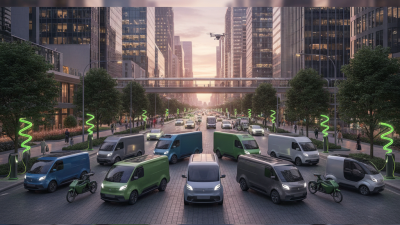
Lately, you've probably heard a lot about the Tiny Electric Truck and how it’s kinda shaking up urban transportation. As cities look for greener, smarter ways to get around, these small but mighty vehicles are becoming a pretty popular option for deliveries or just personal rides. Companies like Rivian and Canoo are really stepping up, showing off some cool innovative designs that fit different needs and lifestyles.
That said, the market for Tiny Electric Trucks is still pretty new and evolving. So, if you're thinking about jumping in, it’s not all perfect — some trucks might have limited range or be a bit pricier than regular trucks. It's super important to really do your homework and weigh your options carefully. Plus, some models might not have all the fancy features you’d expect, so digging into each brand’s reputation for reliability and performance can save you headaches down the line.
And don’t forget—people around the world have different preferences, and things like charging stations or local rules can make a big difference too. Each place has its own set of opportunities and challenges. Basically, understanding what makes a Tiny Electric Truck a good fit for your specific needs can help you make smarter choices in this growing and exciting market.

Best Tiny Electric Truck Options for Global Buyers?
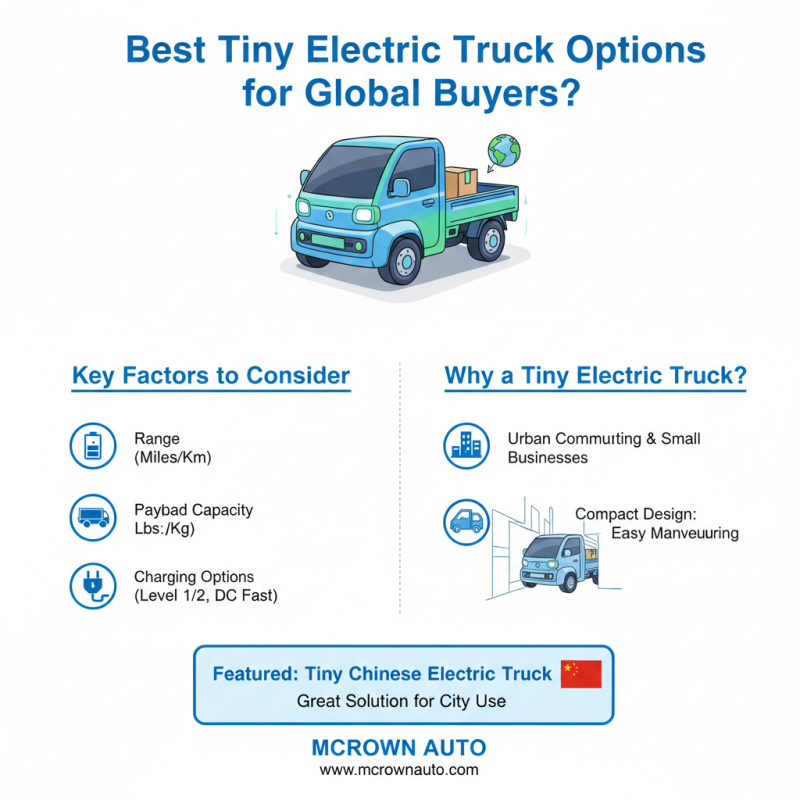
Finding the best tiny electric truck can be challenging. Many options exist, but features often vary significantly. Buyers need to consider factors like range, payload capacity, and charging options. A Tiny Chinese Electric Truck may offer a great solution for urban commuters or small businesses. Its compact design allows for easy maneuvering in tight spaces.
Some tiny electric trucks excel in efficiency. They provide impressive mileage on a single charge. However, not all models are created equal. Some trucks may struggle with heavier loads, impacting performance. Potential buyers should carefully review specifications. Robust customer feedback is essential for understanding real-world capabilities.
Price can also be a point of reflection. While some units are affordable, others might come with hidden costs. Maintenance and battery replacements can add up over time. It's crucial to balance initial investment with long-term expenses. As the market evolves, future options may offer better technology and value.
Global Market Trends for Tiny Electric Trucks in 2023
The global market for tiny electric trucks is experiencing notable growth in 2023.
According to a recent market analysis, sales of small electric commercial vehicles increased by 27% in the past year.
This surge reflects the growing demand for sustainable and efficient transport solutions. Various factors are driving this trend,
including urbanization and increasing regulations aimed at reducing carbon emissions. In cities, space is limited, making compact trucks
a practical choice for delivery services.
Consumer preferences are shifting as well. Many buyers prioritize eco-friendliness
and low operational costs. Data from industry reports suggests that tiny electric trucks can reduce expenses by up to 40%
compared to traditional gasoline vehicles. Not all regions, however, are equally prepared for this transition.
Infrastructure for charging still lags in many areas, posing a barrier to widespread adoption.
Diversity in regulations also complicates market dynamics.
While the future looks promising, challenges remain. Buyers often express concerns about battery life
and range limitations. These factors can deter potential customers. It's essential for manufacturers to address these issues to fully tap into the market potential.
Continuous innovation and responsiveness to consumer needs will be critical as we move forward into a more sustainable transportation era.
Key Specifications to Consider in Tiny Electric Trucks
When considering tiny electric trucks, several key specifications come into play. One significant factor is battery range. A longer range allows for more versatility in urban and rural settings. Many buyers may find a vehicle that promises 100 miles or more per charge suitable for everyday tasks. However, users might underestimate how quickly battery life can deplete, especially under heavy loads.
Another important consideration is payload capacity. Tiny electric trucks often excel in compactness but can fall short in carrying larger items. A typical payload might range from 1,500 to 2,000 pounds. Many customers need to evaluate if this capacity meets their requirements. Some users may discover that they frequently exceed weight limits in practical applications, which could lead to decreased performance.
Lastly, charging options should not be overlooked. The availability of fast-charging stations can significantly impact usability. Some models offer home charging solutions, which can be convenient but may require additional investment. A lack of infrastructure in certain regions could pose challenges for potential buyers. Understanding these specifications helps in making a more informed decision when buying a tiny electric truck, balancing needs with capabilities.
Best Tiny Electric Truck Options for Global Buyers
This chart illustrates the key specifications of various tiny electric trucks, focusing on range (in miles), payload capacity (in pounds), and charging time (in hours), helping global buyers make informed choices.
Comparative Analysis of Top Models in the Tiny Electric Truck Segment
The tiny electric truck segment is gaining traction worldwide. As more buyers seek sustainable transport solutions, various models are emerging. These options provide compact designs while maintaining functionality. The best models prioritize efficiency and usability. Buyers often grapple with choices based on range, load capacity, and performance.
Most Electric Mini Trucks excel in urban settings. They navigate narrow streets and tight parking spots with ease. This is crucial for urban dwellers needing transport solutions. Some models offer innovative cargo solutions. These features enhance productivity while reducing environmental impact. Yet, it's essential to scrutinize battery life and charging speed. Many models vary significantly in these aspects.
However, not all units meet expectations. Some lack the robustness needed for heavy-duty tasks. Potential buyers should consider their specific requirements. Reflecting on how these trucks fit into daily life can yield better decisions. Different features suit different users. This makes thorough research vital in the selection process. Choosing the right electric mini truck can lead to long-term satisfaction and efficiency.
Environmental Impact and Sustainability of Electric Truck Options
The shift towards electric trucks presents a significant opportunity for reducing environmental impact.
According to a report from the International Energy Agency (IEA), transitioning to electric vehicles could reduce global CO2 emissions by up to 4 gigatons annually by 2030.
Electric trucks, particularly tiny models like the L7e Electric Truck, offer urban areas a sustainable transportation solution.
These vehicles produce zero tailpipe emissions, contributing to improved air quality in densely populated cities.
However, the environmental benefits are not without complexities. Battery production for electric vehicles poses challenges, such as resource extraction and recycling.
Reports indicate that lithium extraction can have detrimental effects on local ecosystems. Furthermore, while electric trucks are more efficient, the energy source for electricity generation still has a significant impact.
Up to 67% of global electricity comes from fossil fuels, raising questions about the overall sustainability of electric options.
With the global push for sustainability, tiny electric trucks represent a step forward.
Yet, the industry needs to focus on improving battery technology, reducing production emissions, and increasing the share of renewable energy in the grid.
As these issues are addressed, vehicles like the L7e Electric Truck could play a crucial role in a greener future, but careful scrutiny remains essential.
Regulatory Challenges Affecting Tiny Electric Truck Adoption
The surge in tiny electric truck popularity faces significant regulatory hurdles. Many governments are re-evaluating existing vehicle regulations. These regulations often focus on safety, emissions, and size classifications. A recent report from the Global Electric Vehicle Initiative indicates that compliance costs can stifle growth. Over 30% of manufacturers cite regulatory complexities as a major barrier to entry.
Many countries also lack structured guidelines specifically for tiny electric trucks. These guidelines are crucial for fostering a supportive ecosystem. The absence of clear rules can lead to uncertainty in the market. Manufacturers are struggling to design vehicles that adhere to varying standards. As a result, some may opt out, leading to limited options for buyers.
**Tip:** Stay informed about local regulations. Understanding these can help in making better purchasing decisions.
Addressing these regulatory challenges is essential for widespread adoption. Industry experts suggest a unified approach to standards. This could accelerate innovation and investment. Collaboration between regulators and manufacturers can create more opportunities. Without this, tiny electric trucks may remain niche products despite their potential.
**Tip:** Research different markets for tiny electric trucks. Some regions may have more favorable regulations, leading to better options for consumers.
Best Tiny Electric Truck Options for Global Buyers
| Model |
Range (miles) |
Payload Capacity (lbs) |
Charging Time (hours) |
Price (USD) |
| Option 1 |
100 |
1500 |
6 |
$30,000 |
| Option 2 |
120 |
1800 |
5 |
$35,000 |
| Option 3 |
80 |
1200 |
4 |
$25,000 |
| Option 4 |
90 |
1600 |
3 |
$28,000 |
| Option 5 |
110 |
1400 |
5 |
$32,000 |
Future Innovations and Trends in Tiny Electric Truck Development
The tiny electric truck market is evolving rapidly. Manufacturers focus on efficiency and sustainability. Innovations are emerging in battery technology and materials. These advancements enhance performance and reduce environmental impact. Some trucks are designed for urban environments, combining compactness with utility.
Future trends show promise in autonomous capabilities. This could optimize delivery routes and minimize costs. Safety features are also improving with advanced sensors and AI technology. These developments create an opportunity to rethink transportation methods. However, challenges remain, such as range anxiety and infrastructure support.
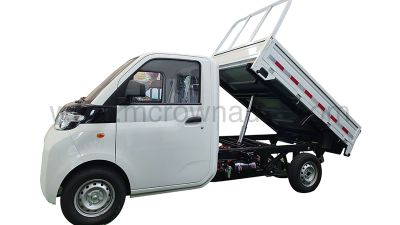
One intriguing concept is the Electric Dump Truck. This vehicle targets construction and landscaping sectors. It can simplify waste management while being eco-friendly. Potential buyers must engage with these innovations critically. Exploring how these trucks fit into existing systems is essential. There's room for improvement in both design and functionality. The journey towards widespread adoption is just beginning.
The Future of Urban Logistics: Integrating Electric Mini Trucks like Reach T10-3 for Sustainable City Transportation Solutions
Urban logistics is undergoing a significant transformation as cities seek more sustainable and efficient transportation solutions. One of the promising approaches is the integration of electric mini trucks, such as models like the Reach T10-3, which are tailored for last-mile delivery and urban distribution. These compact vehicles are particularly advantageous in bustling city environments, enabling delivery of daily necessities, post parcel transportation, and even agricultural products while minimizing their carbon footprint. According to industry reports, the last-mile delivery segment is expected to grow by over 20% annually, thereby increasing the demand for innovative transport solutions that can traverse tight urban spaces with ease.
Electric mini trucks offer a robust framework built on automotive-grade craftsmanship, ensuring durability while also appealing to modern environmental standards. Equipped with smart features including climate control, reverse imaging, and energy recovery systems, these vehicles are engineered to enhance user experience while boosting efficiency. The ergonomic seats and spacious cab design cater to driver comfort, allowing for longer shifts without fatigue, which is critical in a high-demand logistics environment. Additionally, features like electronic power steering and a hydraulic lift system assure maneuverability, navigating through congested streets and tight delivery points seamlessly, a crucial attribute as urban congestion continues to be a challenge worldwide.
As cities strive for innovative solutions to combat pollution and improve accessibility, the adoption of electric mini trucks is set to be a game-changer. By providing a reliable mode of transport that meets the growing needs of urban logistics, these vehicles not only reduce emissions but also promote a more efficient distribution network. The convergence of technological advancements and logistical requirements positions electric mini trucks as an integral part of the future urban transport landscape.
FAQS
: Key factors include range, payload capacity, and charging options. Evaluate specifications carefully.
Some models struggle with heavier loads, which can negatively impact performance. It’s essential to check reviews.
While some have low initial prices, maintenance and battery replacements may add hidden costs over time.
They excel in navigating narrow streets and tight parking spots, ideal for urban commuters and small businesses.
No, battery life varies significantly among models. It’s important to compare specifications and charging speeds.
Yes, many regulations exist regarding safety and emissions, causing uncertainty in the market for both buyers and manufacturers.
Stay informed about local regulations, as they can significantly affect your purchasing decisions and options available.
Not all units fulfill expectations. Reflect on your specific needs to avoid disappointment with your choice.
Conduct thorough research and consider how it fits into your daily life. Different features cater to different users.
Conclusion
The article explores the burgeoning market for Tiny Electric Trucks, highlighting key trends in 2023 that indicate a growing interest among global buyers. It examines crucial specifications that consumers should consider when choosing these compact vehicles, emphasizing their unique advantages and capabilities. A comparative analysis of the top models in the segment showcases the diverse options available, allowing potential buyers to make informed choices.
Furthermore, the article addresses the environmental impact and sustainability aspects of Tiny Electric Trucks, noting their role in reducing carbon emissions. It also discusses regulatory challenges that may influence adoption rates and outlines future innovations and trends poised to shape the development of Tiny Electric Trucks. Overall, this comprehensive overview positions Tiny Electric Trucks as a viable, environmentally friendly solution for urban transportation needs.